How to Build an Industrial Sewage Treatment Plant

To build an industrial sewage treatment plant, you first must address what industrial sewage is. It’s wastewater produced in an industrial setting.

Water treatment plants handle different types of wastewater. You have domestic sewage that contains residential toilet water and gray water (water from showers, baths, washing machines, etc.) from houses and apartments. There’s storm sewage that is the rainwater and snowmelt that goes into drains found on the street. Finally, you have industrial sewage, which is the used water from manufacturing plants and factories.

Industrial sewage often contains higher levels of chemicals and pollutants than domestic sewage or storm runoff. It can be the wastewater created while manufacturing batteries, refining petroleum, and making paper in paper mills. This type of wastewater must be handled appropriately to ensure that it’s clean enough to send back to bodies of water or be reused in the businesses that use the water.

Industrial wastewater often contains heavy metals, food waste, inorganic materials like rubber and metal shavings, microplastics, radionuclides, and many toxins. For this reason, you must treat it appropriately. None of those should be returning to drinking water storage tanks, rivers, lakes, etc. The treatment plant must be designed to treat industrial sewage.

Many sewage treatment plants in residential settings are ill-equipped to handle industrial wastewater. It makes it harder to properly treat the water and damages equipment, leading to expensive repairs and downtime. An industrial business owner has to stop and think of the impact on the local wastewater district. As a result, companies consider building their own onsite treatment plants to pretreat water before it goes to the sewers.

The Steps Involved in Industrial Sewage Treatment

As water leaves your machines and buildings, where it goes depends on your setup. You may need to build an onsite industrial sewage treatment plant. If your city wants you to do the first stages of treatment before releasing your wastewater to the sewers, it’s important to understand what equipment is needed.

You might prefer to put in a small wastewater treatment plant on your grounds and reuse the water. That lowers your water bill and helps the environment. Denmark’s Carlsberg Brewery came up with a plan to use at least 90% of the wastewater the brewery uses and to create biogas to produce energy the plant needs. The goal is to reach zero water waste within the decade. It’s an ambitious, respectful goal that starts with an industrial wastewater system that covers these steps.

#1 – Screening

As wastewater enters a wastewater treatment plant, the solids must be removed. If they’re left in, they can clog lines and damage equipment in downstream processes. Don’t let your plant’s efficiency tank because of damage or clogs.

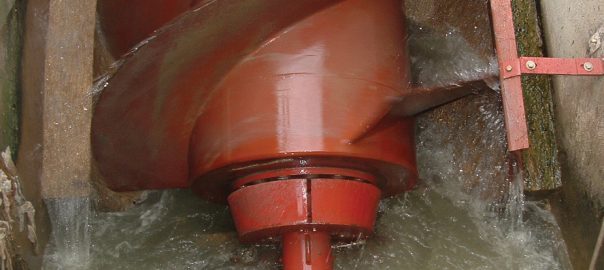
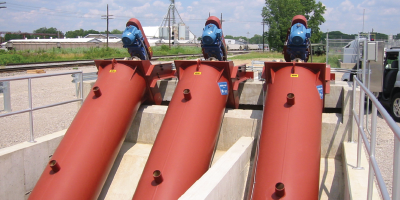
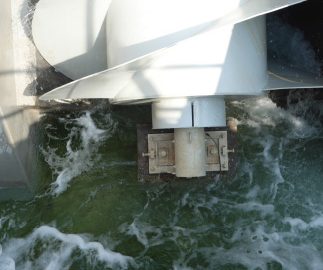
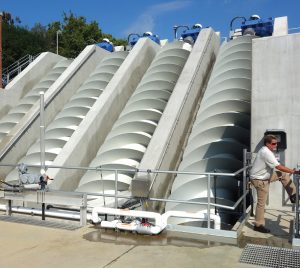
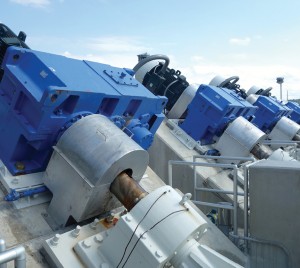
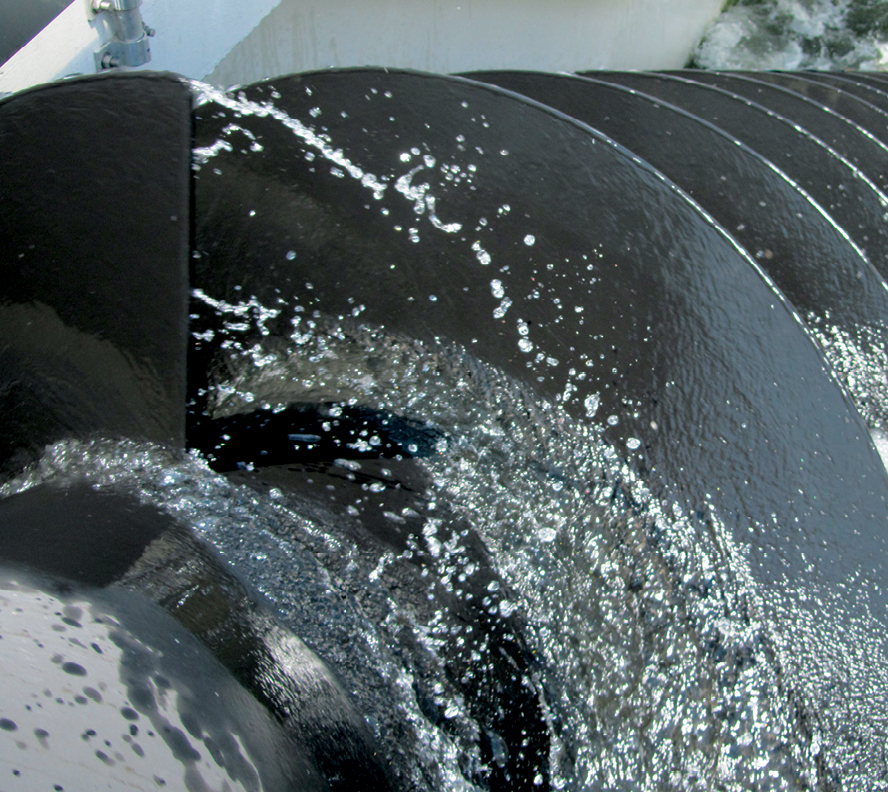
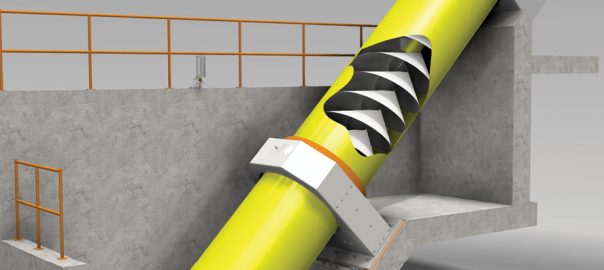
With the use of open screw pumps, you don’t need pre-screening. Move the wastewater into the open screw pumps for screening and grit removal. Once there, additional screw pumps keep the sewage flowing to primary clarification tanks.

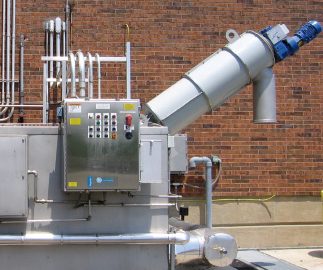
Lakeside Equipment’s Raptor equipment screens and washes solids. From there, they are compacted and dewatered. As they’re made from stainless steel, they’re ideal for use in industrial sewage processes. Choose from rotary strainer screens, rake bar screens, rotating drums, micro strainers, and fine screens. This allows you to choose the best screen for the job.

#2 – Primary Clarification and Grit Removal

Once the wastewater is screened, it goes through the primary clarification process. Some plants also need to install grit removal systems. Clarification moves the wastewater and helps remove any additional solids that have settled in the wastewater.

You might choose a peripheral feed with a surface skimmer that pushes floating solids into a trough where the solids are removed. A Spiraflo clarifier holds solids in a sludge blanket that travels towards a center hopper for removal. Lakeside also has the Spiravac that pushes the solids to the sides where they get trapped between a skirt and wall and end up falling into a settling area.

Not all industrial wastewater treatment plants need grit removal systems, but some do. These systems remove fine grit like coffee grounds, bone fragments, eggshells, etc. You’d want to put in grit collection systems if you run a meat processing plant, a plastic extrusion company where microplastics make their way into the wastewater. Another example is a chicken farm where you’ll have seeds and eggshells getting into the wastewater.

#3 – Aeration

Aeration stirs up the wastewater to add oxygen to the mix. The oxygen feeds the microorganisms that help digest some of the contaminants remaining in wastewater. You don’t want any small particles of waste material to settle at this point. By continually stirring up the water, nothing can settle.

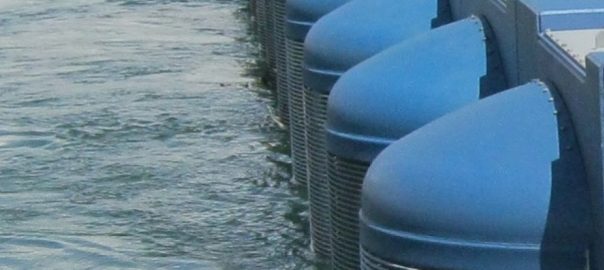
Magna Rotor Aerators have fiberglass rotor covers to eliminate spray. That will keep odors down and protect workers from wastewater droplets. Plus, the covers can trap heat from escaping in the cooler months. The aeration blades are stainless steel, which helps prevent corrosion.

#4 – Secondary Clarification

The water is getting pretty clean at this point, so wastewater goes into secondary clarification. The process is the same as you’d find in the primary clarification process. The remaining particles are negatively charged after the other processes. They’ll bond, which makes it easy for the clarifiers to remove these remaining particles.

#5 – Disinfection

Now it’s time to disinfect the treated water. Industrial wastewater carries a lot of contaminants like lead, chemical cleaning agents, cyanides, etc. Disinfection is required to remove them. UV disinfection is one option. Using UV lighting is an environmentally friendly method for disinfection without relying on chemicals like chlorine.

Chlorine and chlorine products are the first choice in industrial wastewater treatment. In addition to disinfecting the wastewater, chlorine also removes ammonia, kills any remaining organic materials, and oxidizes iron, hydrogen sulfide, manganese, and organic matter. Chlorine is cost-effective, but it has to be removed before the wastewater moves back into a lake, stream, or other body of water.

Other Wastewater Treatment Equipment That Benefits Your Plant

Are there other wastewater equipment and tools you should incorporate in your design? A SharpBNR is a process control system that allows you to fine-tune your equipment along the way. You can monitor readings and adjust aeration as needed. With this system, you maximize efficiency. If you have a SCADA system, you can monitor your wastewater treatment processes from anywhere.

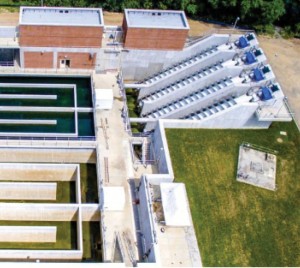
The type of equipment you choose will lower your operating costs and effectively clean the water. Calhoun, Georgia, is home to several manufacturers of flooring, which leads to very corrosive wastewater. Lakeside Equipment helped the city build a sewage treatment plant designed for industrial wastewater by using open screw pumps with stainless steel tubes that withstand the corrosive materials.

Manufacturing plants, food processing companies, and other factories have two goals when it comes to industrial wastewater treatment. They want energy-saving designs that keep costs low, but they also want a water treatment system that properly cleans the water. Meet your budgetary goals and get a system that does exactly what you expect. Give us a call to discuss your industrial sewage treatment plant. Our team of specialists is happy to help design a system to your specifications that’s going to last.

Ten Common Misunderstandings About Storm Runoff and Sewage Treatment Steps

In the early 1900s, poor water quality led to about 100 cases of typhoid fever (a waterborne disease) per 100,000 people. As cities and states started looking into water treatment steps by 1920, the numbers dropped to about 34 cases per 100,000 people. Today, there are no cases of typhoid fever. Wastewater treatment is critical to having clean drinking water.

Even with all of the improvements, there are things people do not understand. One is that storm runoff and sewage treatment are not the same. Here are ten common misunderstandings regarding storm runoff and sewage treatment in the U.S.

Storm Runoff Is Just Rainwater, So It Doesn’t Need to Be Cleaned

When it rains, water that collects in roadways has to go somewhere. Cities and towns have gulleys and ditches where the rainwater goes to divert it to streams and other bodies of water. The runoff travels into city drains and channels that lead to rivers, lakes, and oceans. In a town, you’ll have gulleys and ditches instead.

People often think it’s just rainwater, so it’s clean and won’t harm the bodies of water it ends up in. This is incorrect. Along the way, it picks up motor oil and other automotive fluids that leak from cars traveling on the streets. Dirt, gravel, bark mulch, trash, leaves, grass clippings, and branches end up in it. They can clog the channels and cause back-ups. If there’s no clog, the garbage that the storm runoff picks up travels to the lakes and streams, too.

Cities and Towns Are Equipped for Weird Weather

Strange weather patterns are happening more than before. While wastewater treatment plants and state wastewater districts do what they can to prepare for the unexpected, it’s impossible to predict unusual weather patterns.

For years, the infrastructure has been failing due to older sewer lines, capacity issues, and budgetary concerns. It’s a leading reason that you see cities struggling with flooding and not being designed to handle the additional volume of storm runoff and flooding in wastewater treatment plants. Updating equipment to handle increasing flow rates is essential.

People Have No Impact on Storm Runoff Pollution

There’s another problem with storm runoff. People residing in communities where storm drains exist don’t realize that some of their habits are poisoning the streams and lakes. People may pour their motor oil, cooking oil, or unnecessary cleaners into a storm drain, and those contaminants end up in the bodies of water. Washing cars in a driveway leads to various chemicals traveling to streams, rivers, lakes, ponds, and oceans.

In the winter months, cities and towns that treat roads with salt send the melted snow and salt into nearby bodies of water. Metals from rusting vehicles and vehicle parts also make their way into storm drains and ditches.

Storm Runoff Always Goes to a Wastewater Treatment Plant

Another misconception is that stormwater goes through a wastewater treatment plant along with sewer water. This is not true. Some cities have plants that treat both, but it’s not common.

Storm runoff travels into storm drains that connect to storm sewers leading to waterways in most areas and never gets treated. In rural areas, there are usually ditches along roadways that connect to culverts that allow the storm runoff to travel to a nearby stream.

Rural Storm Runoff Isn’t as Bad as Urban Runoff or Industrial Wastewater

People often think that the runoff in rural areas isn’t as harmful as storm runoff in cities or industrial areas. This is incorrect. One of the worst pollutants in storm runoff is the fertilizer and manure used on farms and lawn treatments in residential areas.

Nutrients found in manure and fertilizer, such as phosphorus and nitrogen, travel to streams and eventually reach lakes. There, they feed algae blooms that can be harmful to people and animals.

Water Treatment Plants Are Always Designed To Handle Industrial Wastewater

A wastewater treatment plant does treat water from residences and businesses. Sometimes, an industrial manufacturer or company needs to install a wastewater treatment plant to pre-treat water before it goes to the sewers.

An on-site wastewater treatment plant helps a business recover and reuse water, reducing the volume of water drawn from municipal water supplies. Plus, it helps reduce the strain on area wastewater treatment plants. As industrial settings may create wastewater with heavier volumes of toxic chemicals, pre-treatment is critical.

Sewage Treatment Takes Care of All Pollutants

Sewage treatment doesn’t take care of all pollutants. The EPA sets guidelines that wastewater treatment plants meet, but some pharmaceuticals still get through. One study found that medications like birth control pills were getting through wastewater treatment processes and making their way to lakes, rivers, and oceans, affecting the reproductive health of fish.

Grinder Pumps End Issues With Everything People Flush

When people flush items they believe are flushable, it can be problematic to a wastewater treatment plant. Though it says “flushable” on the packaging, Flushable wipes do not dissolve in water. They get caught up on equipment at a treatment facility, and they can also create clogs in pipes. The same is true of “flushable” cat litter. Throw them out!

Some facilities add grinder pumps to help break down these items and prevent clogs. Grinder pumps can help, but it’s still best if people stop putting them into sewer systems and septic tanks.

There’s Little Home and Business Owners Can Do to Stop Pollution

Homeowners and business owners can do a lot to help stop water pollution. Carefully consider the products used for cleaning items like toilets, sinks, dishes, clothing, etc. Avoid items that contain harsh chemicals, phosphorus, etc. Aim for environmentally-friendly cleaning products.

Watch what you flush down a toilet. Toilet paper that’s two- or three-ply takes longer to break down. If you prefer thicker toilet paper, remember that it may clog your pipes. If you have a septic system, ask your septic company what they recommend. Many will tell you never to flush anything other than one-ply.

Do not put oils, especially cooking oil, down the drain. Avoid putting coffee grounds and bones down the sink if you use a grinder pump or garbage disposer.

Wastewater Treatment Plants Always Handle Heavy Loads

When wastewater and storm runoff are treated together in a wastewater treatment plant, the system must be capable of handling surges. You could have staff constantly watching for rising levels of sewer water, but it’s wiser to invest in wastewater processing equipment designed to address these sudden increases.

A SharpBNR Process Control is an example. If there’s a surge, the computerized system adjusts aeration and other aspects of wastewater treatment to ensure the water is treated appropriately before it’s released.

Having equipment that can handle increased flow rates is also worth considering. If your plant is upgraded to allow for excess capacity, it’s ready to take on heavy loads. Otherwise, raw sewage is released to prevent flooding within the wastewater treatment plant, which can damage the environment and lead to fines.

Talk to Lakeside Equipment’s experts in wastewater treatment equipment to ensure your plant is equipped for increases in sewer water. When you have considered for increased caused by changing weather patterns or excessive use from area residents, you’re protected from having to release raw sewage while also helping the environment. Call us to learn more about maximizing your plant’s effective wastewater treatment processes.

What Is a Closed-Loop Wastewater Treatment System?

Every household in the U.S. uses an average of 300 gallons per day. The majority of water usage involves flushing toilets, washing hands, and taking showers. You also have businesses using water. Almost half of the freshwater withdrawals in the U.S. are for thermoelectric power and irrigation systems. Public use accounts for about 12%.

In 2013, only eight states in the U.S. reported water shortages as being unlikely. Montana reported a statewide water shortage was likely in the next decade. Two dozen states said there were likely to be regional shortages. Fifteen states reported feeling that local shortages were likely.

As the population grows and water consumption continues, the risk of water shortages is very likely. In fact, 2021 saw the federal government declaring a water shortage on the Colorado River. Immediate changes to water policies were discussed and reductions were placed for Arizona and Nevada.

Every measure that municipalities and districts can take to conserve water is important. That’s where a closed-loop wastewater system comes in. Instead of drawing water from lakes, rivers, and other water sources, water enters a circular system where it is treated to meet water quality requirements and reused. Learn more about closed-loop wastewater systems and see if you could make it work well for your needs.

How a Closed-Loop Wastewater System Works

When you have a closed-loop system, you reuse the water that’s necessary for flushing toilets, washing hands and equipment, and manufacturing or producing components, foods, etc. Water is collected and sent to the wastewater equipment to be screened, cleaned, aerated, cleaned more, and filtered. It may be treated with chemicals to remove bacteria.

Once it meets the required specifications, it’s sent back to tanks where it can be reused. A closed-loop wastewater system can’t completely eliminate your need for water from your district. There’s always water loss to evaporation. But, this type of system can drastically reduce the amount of water needed from municipal water supplies.

What Industries Benefit From Closed-Loop Wastewater Treatment?

How can businesses use a closed-loop wastewater treatment system? Here are different areas where these systems can be incredibly helpful.

  1. Breweries

Breweries use a lot of water. There’s the water needed to make the beer, rinse the grains, and clean the equipment.

Several breweries have installed closed-loop water treatment plants to reduce the amount of wastewater that’s sent to sewers. Denmark’s Carlsberg is one of them.

Wastewater from the brewing process is treated in an on-site wastewater treatment plant. The biogas produced from wastewater treatment is used to heat the brewery. The cleaned wastewater is reused for cleaning. Instead of putting water down the drain, the brewery reuses almost every drop.

  1. Car Washes

Have you ever taken your car to an automatic car wash? Do you own a car wash? Studies have been completed on the amount of water used during a car wash.

With self-serve car washes, around 12 gallons are used per vehicle. A conveyor system uses about 44 gallons, while an in-bay car wash uses the most at 72.5 gallons on average. A closed-loop system is a great way for car washes to recapture the dirty water, clean it, and use it to wash more cars.

  1. Chip Fab

Millions of gallons of water are used every day in a large chip fabrication plant. Some of the nation’s largest chip fabs have started setting up closed-loop systems to reuse water. Others, such as Intel, have established systems that reduce the amount of water they use by over 40% and keep making improvements.

  1. Dairy Plants

In 2018, Hiland Dairy was recognized for its closed-loop initiative. The plant added an on-site wastewater treatment facility to process the whey wastewater. The lagoons the plant added can treat upwards of 250,000 gallons per day. The whey that’s separated from the wastewater is used as fertilizer for its feed crops.

  1. Distilleries

To make spirits, water is needed. It’s estimated that almost 10 gallons of water are used to make one liter of whatever spirit is being distilled. Gallons of cold water running over condensers ends up being incredibly wasteful.

To stop this waste, Laws Whiskey House in Colorado established a closed-loop system where water is recycled and cooled for reuse. This saves about three gallons of water per liter bottle of whiskey.

  1. Hotels/Resorts

A hotel or resort goes through a lot of water. Guest baths and showers, toilet usage, and kitchens use thousands of gallons of water each day. Plus, you have the laundry room where sheets and towels are laundered every day.

A closed-loop wastewater system can make a big difference in a hotel or resort’s water consumption. Water is filtered to remove lint and toilet paper. It then goes through aeration and cleaning. Solids are removed and composted or removed to waste facilities. Once the water is treated and meets required standards, the water is reused.

  1. Laundromats

A closed-loop wastewater treatment system can reduce a laundromat’s water consumption by as much as 80%. Once a load of laundry is completed, the wastewater is screened and sent into a tank where it is filtered to remove lint and grit from dirt. After going through additional cleaning steps and filters, it can go into water tanks to be reused to wash another load of laundry for someone else.

  1. Restaurants

In 2021, a company announced they’d created The Endless Sink, a stand-alone closed-loop wastewater system that cleans the water used to wash dishes again and again without needing to draw much additional water.

A closed-loop system is great for large kitchens that serve hundreds of diners. Oils and food particles are removed. The remaining soapy water is filtered and purified to remove all bacteria. From there, it can be used again at sinks or in dishwashers.

  1. Rest Stops

Interstate rest stops see thousands of visitors each day. Those visitors are there for bathroom breaks and to stretch their legs. Imagine how much water is used every time a toilet flushes and hands are washed.

Vermont is home to an amazing closed-loop wastewater system that serves thousands of people every day. Instead of overworking the septic system in this rural area, a closed-loop system cleans the water for reuse. Set right off the interstate, The Living Machine is set within a large glass solarium. A series of tanks contain plants, aquatic insects, snails, and worms.

When visitors stop to use the toilets, they flush the water and it goes into the septic system where solids settle and the rest of the wastewater travels to treatment tanks where aeration occurs. After aeration, the vegetation, animals, and insects do their part to complete the cleaning process.

At this point, the cleaned water returns to the toilets and sinks in the bathrooms where it’s reused and the cycle continues. Signs tell visitors about the process and provide notice that the water is not meant to be consumed.

It’s Time to Consider a Closed-Loop Wastewater System

Your company goes through thousands of gallons of water every day. It’s time to consider how you can lower your impact on the environment. What steps can you take to reduce the amount of water you’re using to wash equipment, process foods, or other processes that require a lot of water?

Work with the engineers at Lakeside Equipment on the closed-loop wastewater system your business needs. Whether you need a large system or a smaller one, we can help you. Since 1928, we’ve specialized in water treatment for industrial and municipal settings. Call us to learn more.

Upgrade or Repair: Which Makes Sense for Your Water District?

Here’s a concerning statistic. There are more than 16,000 wastewater treatment plants in the U.S. and many of them are at 81% of their capacity. About one out of five are at or over their max capacity. When a facility is at max capacity, untreated wastewater ends up flowing into lakes, rivers, and streams where people and animals are exposed to it.

In 2019, districts across the nation spent more than $3 billion on upgrades or repairs to pipelines. The gap in what was needed was around $81 billion. Recent grants and funding promise to help with some of this, but there are still many districts that have an impossible choice. Do you repair your district’s system again and hope it lasts or is it time for upgrades?

How Long Has Your Wastewater Treatment Plant Been Operational?

On average, a wastewater treatment plant is designed for no more than 50 years before changes are necessary. As the populations in towns and cities increase, more wastewater goes to a plant, and that means the existing equipment may not be enough. If more wastewater is coming in than the equipment is able to process, the release of untreated wastewater is going to happen.

Are the fines you’ll face from the EPA or your state government worth it? These fines may end up costing more than upgrades would cost. Take a look at some of the recent fines issued to wastewater treatment plants in the U.S.

  • Alabama – $250,000
  • California – $816,000
  • Connecticut – $2.4 million
  • Indiana – $3 million
  • Michigan – $100,000
  • New Mexico – $1.2 million

One thing to remember is that many of the fines also come with the requirement that you make the required upgrades or repairs. You end up having to pay even more, and your wastewater district members may not like the rate hikes that are required to cover these urgent fixes.

When Do You Repair Instead of Upgrade?

It’s clear that something has to change. When should you repair rather than pay for upgrades? The most important reason to repair is that your budget is limited. No one wants to scrape along with older equipment, but if there’s simply not enough money for upgraded equipment, repairs will have to suffice for now. What other situations call for repairs over upgrades?

  1. Your Equipment Isn’t Too Old

If your equipment is still newer, it’s not always smart to replace it yet. It still has a lot of life left, so repair whatever isn’t working effectively. If a pump blows, it’s better to replace the pump than an entire system.

  1. You Don’t Have Time for Replacements

It may not be the right season to be shutting down part of your wastewater treatment plant. It’s winter, and more people are at home and taking warm baths at night, so wastewater generation is higher than it is in the summer. Your town might be a popular spot for tourists, and once the summer tourism season ends, wastewater generation will drop by more than half. If you need to repair now to buy time until less wastewater is being generated, wait until then.

  1. Funding Isn’t In Place Yet

You may have applied for grants to pay for new wastewater treatment equipment, but the grant money isn’t being distributed until the third quarter. You can’t hold off yet, so make just enough repairs to carry you over and then replace equipment when you have funding. 

When Should You Upgrade?

Before you even experience fines, when should you consider upgrades? Here are five reasons to upgrade.

  1. Energy Costs Are Rising

Your bills keep rising, and the people in your district are not happy about it. This can be a sign that pumps and motors are working more than in the past. Upgrading to more energy-friendly pumps and motors will cost money, but the amount you save on energy bills makes it worthwhile.

You can also consider upgrades to help power your plant. Add a system that converts the methane your plant produces into fuel to heat to cut your heating bills. Look into solar panels and wind turbines to help produce the energy your plant needs to run.

  1. Equipment Breaks Down Frequently

Your equipment seems to break down every month. When that happens, you have to stop the treatment process or lower the capacity, which puts you at risk of flooding and raw sewage releases. If you’re spending more time on repairs than you have in the past, it’s time to look into upgraded, maintenance-free wastewater treatment equipment.

  1. The Population Is Rising Faster Than Expected

Your town should be considering the added wastewater generation when new construction is considered, but you can’t always control how many people move into a new home. You also can’t control how many showers or baths a person takes each day. You will have the people who take a bath and two showers every day without realizing how much extra wastewater they’re generating. If the wastewater generation is more than planned, you could find yourself quickly reaching capacity.

By building a system that’s larger than needed, you help allow for growth. If more people moved into a new development than you expected, you still have plenty of capacity for the increase. You do need to closely monitor this throughout the year and remain in contact with the city planners.

  1. Treatment Standards Have Changed

Wastewater treatment standards change from time to time. As the guidelines regarding the max levels of a certain component change, you need to meet or exceed the changing guidelines. This may mean having upgraded equipment that’s able to filter the wastewater to the appropriate levels.

  1. Your Wastewater Treatment Plant is At Capacity

When your wastewater treatment plant is at or very close to capacity, it’s time to upgrade your equipment. You can’t risk the fines you’ll get by releasing raw sewage. You have systems in place to monitor how much wastewater is treated and flows into your plant, keep track of these numbers, and address issues sooner rather than later.

  1. You’ve Been Warned the Repairs Won’t Last Long

You might save a lot of money with repairs, but you’ve been told that the repair is only going to carry your plant for a month or two. If you have to pay for the same repair weeks from now, why keep spending money? Pay for the upgrade once and avoid all of the extra repair costs.

Discuss Your Options

Sometimes, the costs of repairs vs. upgrades are not as different as you might imagine. Talk to an expert in wastewater treatment plants to find out how much it would cost to repair equipment vs. replace it. You may find that it ends up being more affordable to replace equipment. Plus, there may be incentives that you can apply for to help cover some of the cost of the infrastructure upgrades you need. If you’re saving your district’s members money in the long run, they’ll appreciate it.

Lakeside Equipment offers cost-effective upgrades if that suits your district better. Or, work with our team on repairs that provide the efficiency and effectiveness you need. Water treatment is our specialty and it’s one we’ve been involved in since 1928. Our mission remains to have Cleaner Water for a Brighter Future. Talk to us to learn more about the ways you can join us on that mission.

What Is a Wastewater Bar Screen & Why Do I Need One At My Treatment Plant?

People often flush items that never should have been flushed. Menstrual products, diapers, baby wipes, condoms, and even accidental children’s toys can end up in the sewers and septic tanks and into your wastewater treatment plant.

Items like paper towels, baby wipes, and even the supposedly flushable wipes or cat litter can collect grease that goes down drains while washing dishes. It creates the fatbergs that create blockages in sewers.

Fatbergs can be gigantic and create major headaches for wastewater workers. The biggest fatberg in the U.S. to date was found in Detroit and measured 6 feet tall, 11 feet wide, and 100 feet long. This isn’t the largest fatberg found in sewers. One found in London was estimated to weigh 130 tons and stretched for over 820 feet.

It’s not just things that people put down the drain or flush in a toilet. If your district has a combined sewer overflow, which combines stormwater runoff systems and the sewer system, you’ll also end up with trash, branches, leaves, and other debris. All of these items can do a lot of damage by clogging channels and lines or getting caught on equipment. It’s important to screen incoming wastewater and septage to remove them.

Wipes Are a Costly Problem

A 2019 NACWA study looked at the added cost that baby wipes place on different states’ wastewater districts. In California, the cost came to more than $47 million. New York was second with added costs of almost $38 million. Illinois, Ohio, and Texas rounded out the top five with respective totals of $29 million, $25 million, and $25 million. In all, wipes add more than $440 million in operating costs to wastewater treatment plants throughout the country.

People in your district may not have any idea of the problem they’re creating while using wipes. Many are marked as flushable products, just like toilet paper, yet they do not dissolve effectively. Ryerson University looked at 101 brands of wipes, 23 of which were labeled flushable, and none of them broke down enough to prevent clogs.

Once in the sewer lines, wipes can increase operating costs by creating fatbergs that must be broken up and removed. At lift stations, they accumulate on screens and have to be removed, but if the bar screens are not narrow enough, they get into grinders and pumps and increase maintenance on those pieces of equipment. Wipes increase the maintenance that has to be performed on grinder pumps, dewatering pumps, mixers, and tanks.

An overloaded plant can also pose problems. If a clog has slowed wastewater from reaching your plant, you can have backups causing damage to homes and businesses. It may back up and enter the environment. If you have a sewer overflow, you face costly fines. When the wastewater finally releases as a clog is broken up and removed, you have a rush of wastewater coming into your plant. If you overload your equipment, you may have to release raw sewage, which can also lead to fines.

Wipes also drive up your plant’s disposal costs as items must be removed to containers, and trucked to landfills. You have the trucking fees, extra manpower, and disposal fees at the landfill.

The NACWA broke down what the added cost of wipes adds to a household’s sewer bill. In some areas, it’s about $5 a year, but it can be as much as $25 per year extra. This may not seem excessive, but added to other increasing expenses, it can strain households with a limited income.

There are two things you need to do. First, educate your district members about the importance of flushing only toilet paper and throwing out wipes, sanitary products, paper towels, condoms, etc. Make sure they are well aware of the problems that can drive up their annual wastewater bills. Second, install bar screens at your wastewater facility. Bar screens prevent a lot of frustration and damage in the long run.

What Do Bar Screens Do?

To reduce the damage and annoyance trash and wipes cause, bar screens are an important primary step in any wastewater treatment plan. If your plant doesn’t have a bar screen system or has an older, outdated one, it’s time to change that.

As wastewater comes into your plant, it travels through a channel and that channel has a series of coarse and fine bar screens that are usually spaced between a quarter-inch up to three inches apart. They trap items that shouldn’t be in a wastewater treatment plant, such as plastic or paper items that were flushed, animals that got into the sewers and died, and other debris like bone scraps that may get rinsed down the sink.

The bars trap the items, which could pose problems if they’re just left there. They’d block the flow of wastewater over time. That is prevented by having an automated rake that sits on the bottom of the channel and moves upward to capture all debris and some solids and lift it out of the wastewater.

At that point, the items that have been removed can go into bins to go to the landfill. Trash and hard organic materials aren’t going down the line where they can damage equipment or become extra work for your employees. The wastewater flows into the plant to begin the treatment process.

Choose a CO-TEC Screen for Easy Maintenance

The CO-TEC screens have fine and coarse galvanized steel or stainless steel bar screens that are cleaned by rake teeth that are positioned downstream of the bar screens to capture and remove trash and other debris. As all of the parts are above the surface of the wastewater, the maintenance on them is easier for your workers.

Lakeside Equipment is a trusted provider of wastewater bar screens and other crucial equipment that improves efficiency within your plant. New equipment does have an upfront cost, but the savings on the plant’s electricity bills provides a return on your investment in little time and keeps maintenance and operating costs down in the years to come. That makes the people in your district much happier in the long run.

Since 1928, Lakeside Equipment has specialized in water purification. Not only can we repair your existing wastewater treatment equipment, but our professionals offer sound advice on what you can do to improve your plant’s efficiency and avoid costly fees for improperly treated wastewater or sewer overflows.

Our team helps design the upgrades you request, keeping within your budgetary restraints, and installs bar screens that prevent problems caused by items that shouldn’t ever be flushed. Give us a call to find out more about the benefits of bar screens.

Sources:

https://www.mlive.com/news/2018/09/fatberg_metro_detroit.html

Removing Inorganic & Solid Materials From Wastewater

Wastewater is the water and material that travels from a home, business, or factory to sewer lines or septic tanks. It includes a mixture of inorganic, organic, and solid materials. The water from showers, sinks, dishwashers, toilets, and washing machines all become wastewater. It also includes the water used in food and beverage manufacturing and processing, paper mills, and many other industries. 

Some cities and towns have stormwater drains connected to the area sewer systems, known as combined sewer overflows. Combined sewers are not ideal as any heavy rains or melting snow also become part of the wastewater a plant receives for treatment. 

Around 700 combined sewers exist in the U.S. All of these combined sewers have to have plans in place to reduce the release of raw sewage if it floods, as do all sanitary sewer overflows, which are the typical sewer lines and sewer systems found across the U.S.

Before this wastewater is released into a body of water, be it a river, lake, or pond, solid, organic, and inorganic materials must be removed. How is this done?

Understanding the Differences Between Inorganic, Organic, and Solid Materials

Solids are pretty easy to understand. It’s the fecal matter, toilet paper, and items that shouldn’t have been flushed like toys, baby wipes, and plastic wrappers. 

You also have organic and inorganic materials. Organic matter includes living things like bacteria, parasites, fungi, and algae. Inorganic matter includes the minerals, metals, chemicals, and salts that are in urine, industrial wastewater, detergents and cleaning products, and water from washing dishes and cooking.

How Solids, Organics, and Inorganic Materials Are Removed

All organic, inorganic, and solids have to be removed from wastewater, and it usually involves three main treatment steps and the different stages of each one. The steps include:

  1. Primary Treatment

In primary treatment, wastewater moves through screens where solid materials like plastic applicators and bags, sticks, and other trash catch on the screens and is raked into collection bins to be transported to the landfill. In most plants, the wastewater now goes through grit removal, where items like coffee grounds, eggshells, sand, bone chips, and seeds are removed. It’s important to remove grit before it damages equipment through abrasion and settles and clogs pipes. The grit can be transferred to compost piles or landfills.

After grit collection, the wastewater flows into tanks where it is given time to settle. During settling, the heavier waste sinks to the bottom. Lighter materials like fats, oil, and grease (FOG) float to the top. The FOG is skimmed and removed, while solids are pumped from the bottom for sludge treatment. The remaining wastewater moves to secondary treatment stages.

Sludge treatment is a separate process where it is introduced to bacteria to help it decompose. This process produces methane. Some districts have systems set up to capture the methane biogas and use it to generate power or heat the buildings in the wastewater facility. The remaining sludge may be incinerated or disinfected and used as fertilizer. 

  1. Secondary Treatment

Wastewater that isn’t part of sludge or oily scum moves to secondary treatment stages. The next stage of cleaning the wastewater involves bacteria. Any sludge that remains goes from the bottom of the tank back to the beginning of the process to start over.

Some districts use fixed film systems to encourage the growth of bacteria as wastewater flows into secondary treatment steps. Others use suspended growth systems using decomposing bacteria and aeration to help grow bacteria and speed up digestion and decomposition. This is also helpful in reducing the ammonia found in wastewater from urine.

With an aerated system, wastewater moves to aeration tanks where oxygen is added to help aerobic bacteria thrive as they consume the organic materials that remain. Bacteria will remove these particles before their lifecycle ends. At that point, the wastewater is almost clean and heads to the final steps in wastewater treatment.

  1. Tertiary Treatment

Filters may be used to help filter any remaining particulates. Biofiltration is used to filter out some of the particles remaining in the almost-cleaned wastewater. Biofiltration may use sand, charcoal, or coconut fiber filters. Each plant has its preferred biofiltration material.

Often, the levels of nitrogen and phosphorus are still too high to be safely released into area lakes and rivers. If they were released at this stage, they encourage the growth of algae blooms and invasive weeds. For that reason, the water treatment process isn’t done. 

More bacteria are needed to absorb phosphorus and nitrogen. Or, water may be moved into lagoons where plants and zooplankton absorb them over time. 

To kill any remaining pathogens, chemicals like chlorine might be introduced. If they are used, the water has to be exposed to UV lights to dissolve the chemicals to recommend levels before the treated wastewater is released or transported to a water treatment plant to go back to area homes and businesses.

The equipment used and stages followed depend on the district and what the EPA permitted levels allowed in that region. Every wastewater treatment plant has instructions from the EPA setting limits for things like chlorine, E. coli, etc. are allowed. Wastewater treatment plant stakeholders need to make sure the equipment in the plant is capable of performing the job effectively and efficiently. 

Saving money is ideal, but not if the equipment you’re saving money using is failing to do the job required of it. Upgrading equipment for better performance saves money in the long run as you won’t face fines and potential criminal charges.

Tips to Help Produce Cleaner Water

If you read the news, you probably spot articles from time to time where a wastewater district was fined for releasing raw sewage – either knowingly or accidentally. Automation is one of the best tips for getting solids and inorganics from wastewater. When you have automated wastewater treatment equipment, the computer can gauge flow rates and adjust pumps and aerators accordingly. 

This ensures the different steps are handled correctly and lowers power consumption and wear and tear by slowing down pumps when people are using less water in their homes while they’re sleeping or at work. During the busier times of day, such as morning showers or dinner-time chores and preparations, computers will increase pumps as needed.

If something is changing and needs correction, a SharpBNR and PLC instrumentation package helps prevent the release of raw sewage. Paired with SCADA systems and HMI, human error is less likely to happen as alarms are sounded before major problems occur. You have time to react, and options like Variable Frequency Drives and motor starters make adjustments so that your team isn’t rushed to get to the right area of the facility. If you don’t have this technology in place, it’s time to look into it.

Take time to talk to your district’s residents and business owners. The more they know about the problems that impede water treatment steps, the easier it is to do your job. They may not realize that a “flushable” wipe, wrapper, or applicator isn’t truly flushable. Mailers and ads help spread the word.

Lakeside Equipment has close to a century of experience in water treatment technology and equipment. We’re leaders in water quality and are happy to talk to you about your plant’s equipment and design and offer insight into the solutions available to increase efficiency and water quality, all while lowering your maintenance costs and demands. Reach out to us and let us know how we can help.